

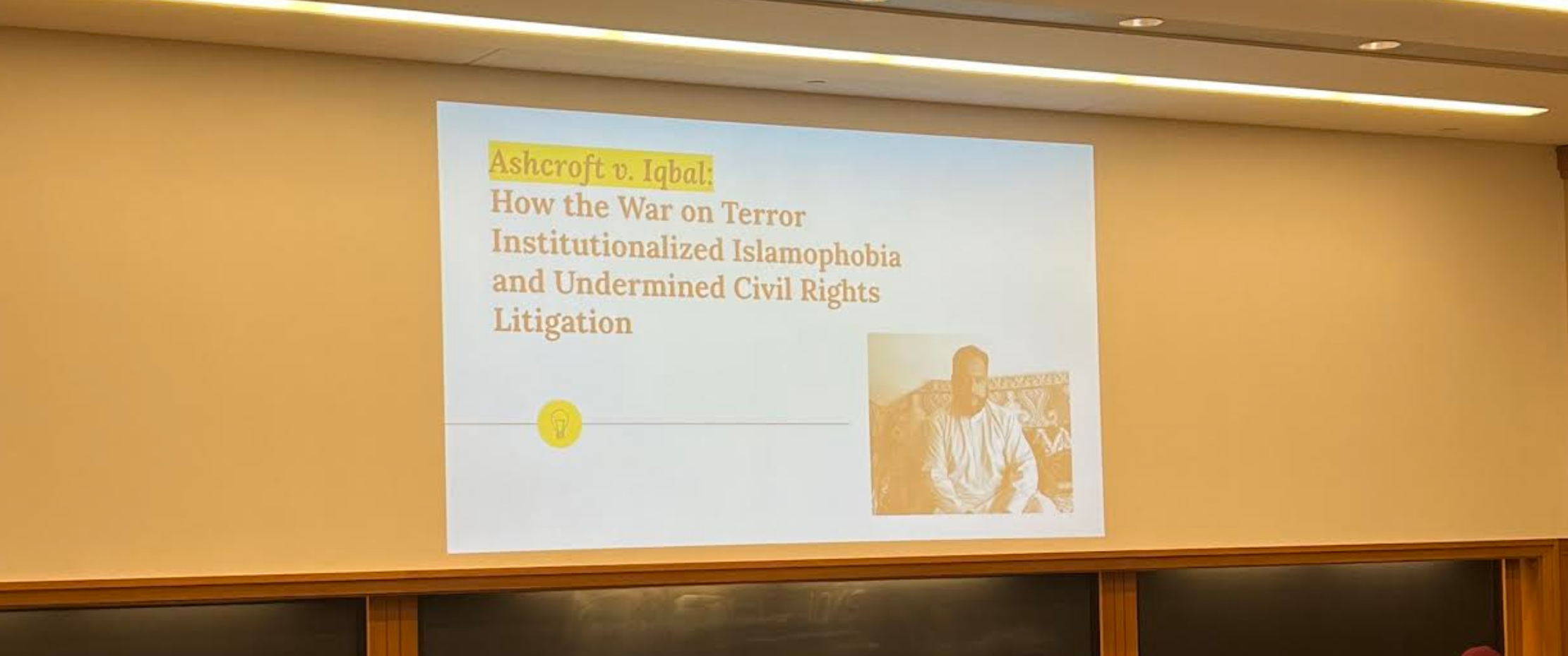
As a doctrine more focused on form than substance, Civil Procedure is generally regarded as “separate from politics” or without controversy by law students. Ibrahim Bharmal, HLS/HKS ‘25, saw something different.
In 2021, during his first year (he is a dual degree student) civil procedure course, he read the landmark case Ashcroft v. Iqbal, known for its establishment of a more demanding pleading standard for plaintiffs. Bharmal sought to learn more about the way civil procedure can tip the scales of the law in one direction or the other, he soon read Shirin Sinnar’s celebrated work “the Lost Story of Iqbal” which revealed its hidden story of the horrific abuse of an innocent Pakistani man by US officials.
After his completion of the course, he was approached by his civil procedure professor, Jim Greiner, the Honorable S. William Green Professor of Public Law, about serving as a teaching fellow (or “TF”) for him. Bharmal accepted with the intention of using his course development project to teach Iqbal with a broader analysis of its relation to power dynamics in the law. Eventually he devised an optional review session for first-year students in Professor Greiner’s 2022 civil procedure course, which explained the Sinnar article and the effects of the pleading standard on plaintiffs.
In 2023, continuing as a TF for Professor Greiner, he expanded beyond just the pleading standard and Iqbal. While Bharmal retained the presentation he devised from the previous year, he also wanted to discuss other concepts. Drawing upon the analytical framework of critical legal studies, he analyzed subject matter jurisdiction, personal jurisdiction, horizontal choice of law, and other structures in civil procedure over three more optional review sessions on non-legal research and writing weekdays, entitled “Critical Procedure.”
Sofia Bottinelli, HLS ‘26, so appreciated the sessions that she opted to join the project with Bharmal in her capacity as a research assistant (or “RA”), following an offer from Professor Greiner to serve as both a TF and a RA. Bharmal, now an RA, further expanded the project with Bottinelli for 2024, designing four separate review sessions open to all 1L sections for this year’s version of Critical Procedure.
“The best way to learn is through teaching,” said Bharmal, noting that his work teaching students learn civil procedure has helped him better understand the subject. “The process of bringing these concepts together was really rewarding.”


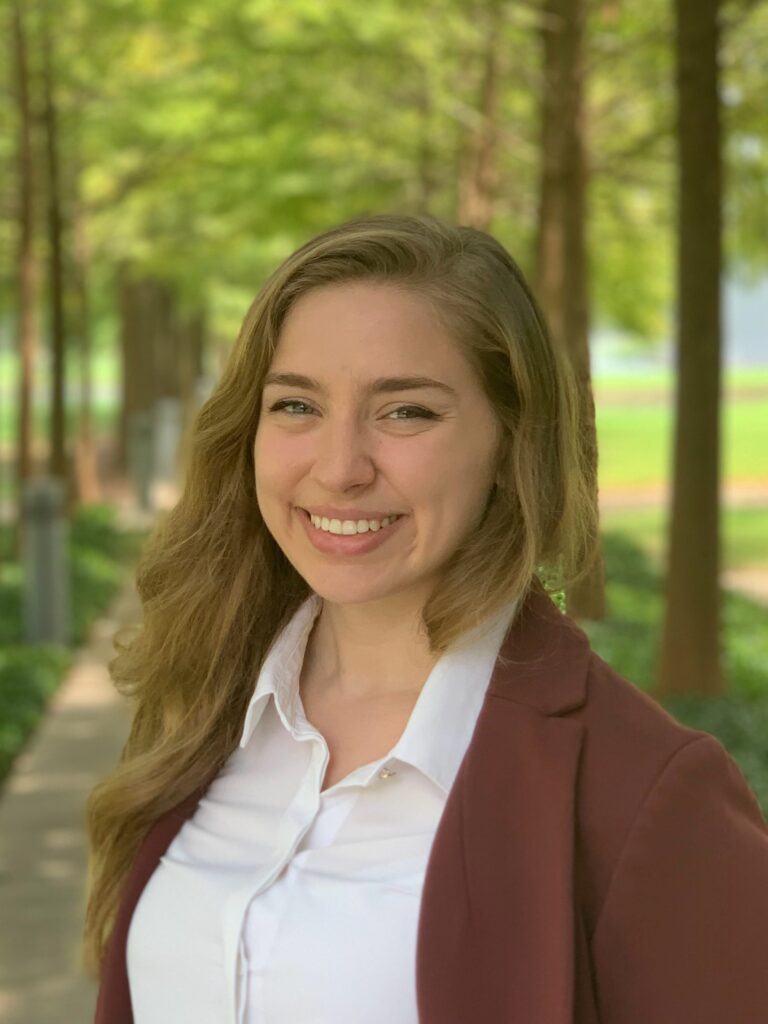
Bottinelli felt similarly about the value of designing the project, “I think being law students we really forget about the real-life implications of the law.” She continued: “None of this happens in a vacuum, it matters so much to everything we see all around us.” For her, teaching Critical Procedure was a centering experience amidst the disorientation of law school. “It was very important to me as a student to be grounded in [the real-world implications of civil procedure] here and why it matters.”
Jenny Guzdial, HLS ‘27, followed in Bottinelli’s footsteps, experiencing Critical Procedure last fall as a student of Professor Greiner’s and helping to build the sessions out further as a TF in fall of 2025. “Taking the course definitely separates you from just reading black letter law…it helps you realize that you have real autonomy in changing [the law] in the future.” Guzdial noted that while being a 1L can “feel like your head is just above water,” these evening meetings “stop you from feeling helpless and allows you to feel hopeful about what you can do.”
Professor Greiner, for his part, also sees the project as part of a panoply of tools to improve student experience. “Critical Procedure is one among several efforts students have pioneered to get a broader perspective on Civil Procedure, supposedly the most dry and rule-bound of 1L courses,” said Greiner. He added that supplemental instruction on the law and economics of civil procedure, critical procedure, and other specific major cases “allow students to understand how Civ Pro doctrine reflects value judgments and political choices.”
The other students deeply appreciated the support from the professor, which helped them grow the project from a one-off event to something much more ambitious. In the face of challenges, Greiner empowered Bharmal and Bottinelli to find their creativity and open the sessions up to other sections. This past year, he also provided dinner and refreshments for the attendees, which helped encourage students to fit the evening events into their schedules.
Bottinelli has been grateful for how it has grown, stating that she feels “like we’re co-architects of something immensely important.” Bharmal echoed the appreciation, stating that “he really believed in me, and I think that’s really valuable in a law school environment.” He described the faith he put in them as “testament to how much he cares for students.”
Despite the pride the trio has in the project as it existed, they dream of an even bigger turnout next year. Their first two events had about 30-40 attendees, whereas the last two had more, like 15-30; over the entire breadth of the programming, they drew students from four out of the seven 1L sections. Bharmal described advertising to other civil procedure courses as the “biggest obstacle was trying to expand this to other professors; professors have their own way of teaching their legal concepts.” He added that one of the goals for next year’s iteration is having TFs from other courses help develop “language that is complementary to as many ways professors do this as possible.”
The various designers of Critical Procedure understand it as playing a key role in teaching students how to navigate an increasingly fraught legal world. “Right now, I think the role of the law as a tool for subjugation is being seen and questioned in a major way.” said Bottinelli. “Deportations of people, including US citizen children, without due process, and enforced disappearances of students, among many other very horrifying (il)legal actions, are headline news.” She argues that despite the imposing atmosphere, “the law is also a tool for liberation, and it is our duty to learn, and to fight, and to win” for clients.
Bharmal remarked “I view this curriculum as an essential intervention, and a source of empowerment for people who want to learn the tools they need to help people who are under attack and marginalized.” If future lawyers hope to design (or defang) formidable lawsuits, they ought to know that “civil procedure is the Achilles’ heel of most lawsuits” as Bharmal noted.
Guzdial argued that the curriculum can also provide important context for what the lay of the land currently is. “By learning the history of structural inequality and prejudice that led to the doctrine, it allows the ugliness of these laws to come out from the shadows and into the light where students can feel empowered to attack it head on.” said Guzdial.
Professor Greiner emphasized that knowing that civil procedure reflects political value judgments is “now more relevant than ever as the United States experiences a period of challenge to previously accepted norms and practices, including challenges to the authority of the court system to say what the law is.” Not only does this provide the students who attend a better grasp of the substance of the doctrine, but it also “makes for a superior classroom discussion.”
With the chief architect of the curriculum, Bharmal, graduating this year, its future lies in the hands of Bottinelli and Guzdial. Guzdial expressed hopes to experiment with ways “we can encourage people to bring their own perspectives and their own feelings.” Bottinelli half-jokingly stated that she “may still be seeking a lot of support and guidance from Ibrahim,” but will still experiment with adding a fifth session with Guzdial and solidifying the marketing strategy to other sections.