

UPDATE: This article did not initially reflect that the two emails shared by Mr. Kline were initially received by an indeterminate number of HLS students via their spam inbox. Subsequent to this, it appears that Mr. Kline added a more comprehensive list of names, including the entirety of the HLS student body, and seemingly in a different recipient order from the initial spam list.
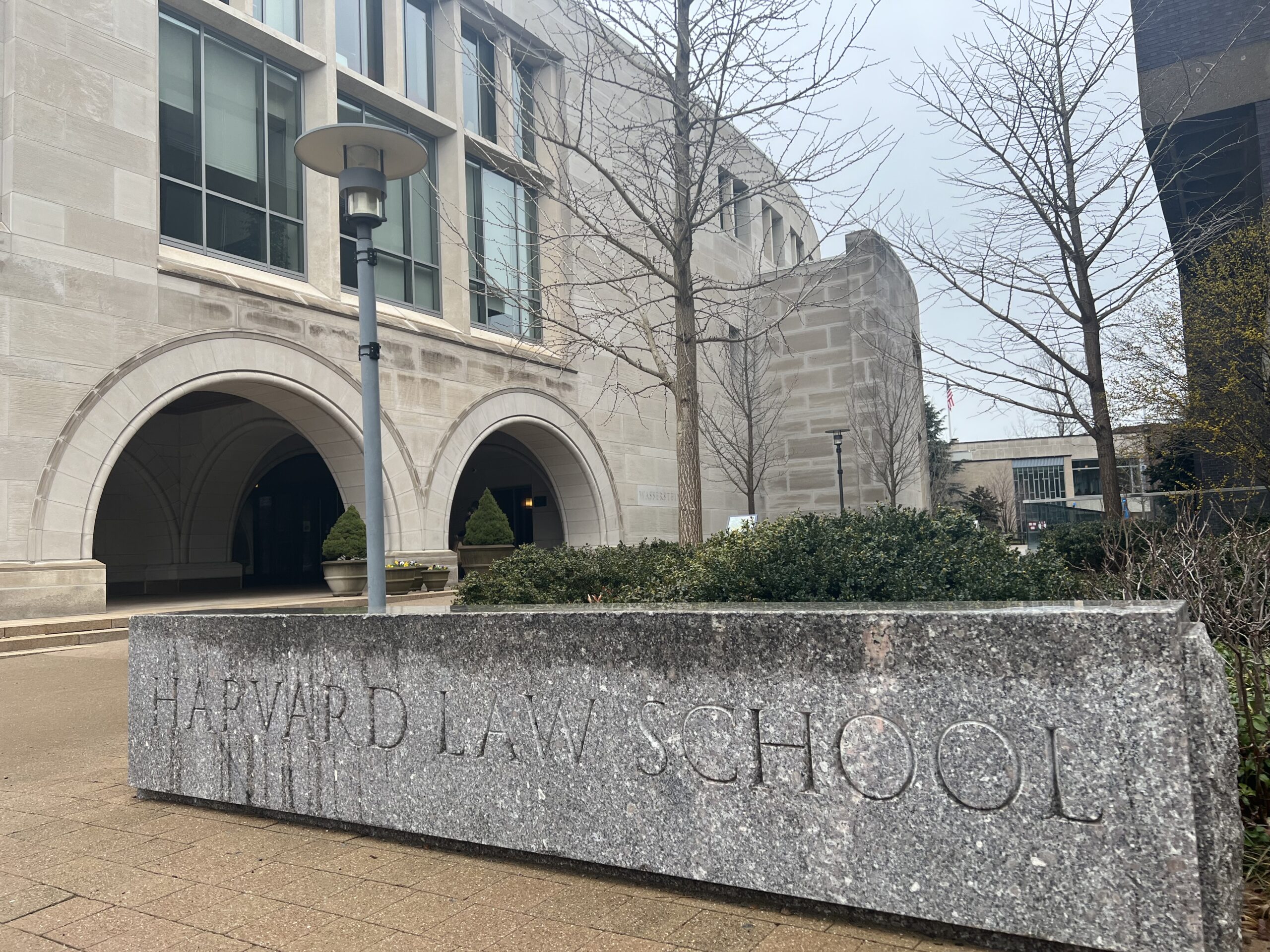
On Friday night at 10:38 PM, the final day of courses at HLS for the academic year, a pair of emails appeared in the inbox of every student at Harvard Law School entitled “Litigation-hold e-mail” and “Advice for the Harvard Law Review’s personal statement.” Joseph Kline, HLS ‘25, shared two missives with the entire student body, claiming that each “went to my spam folder, but it seems important, so I’m forwarding it.”
The first email alleges that Harvard Law Review’s admissions process awards “discriminatory preferences” to marginalized classes and announces that Faculty, Alumni, & Students Opposed to Racial Preferences (FASORP) intends to sue the Law Review and the University for these practices. The second email makes further allegations against the the law journal and encourages students to make false representations as to their respective identities to circumvent the application process. On its website, FASORP describes itself as a “voluntary membership organization that litigates against race and sex preferences in academia.”
Despite providing no evidence aside from uncited anecdotes regarding the extant admissions policies at Harvard Law Review, the emails claim that the Law Review’s editors “violate the federal- and state-law prohibitions on discriminatory race and sex preferences” by way of their holistic consideration of “adversity” described in an applicant’s personal statement. Specifically, they claim that journal’s policies are “in violation of Title VI, Title IX, 42 U.S.C. § 1981.” Pursuant to this allegation, the first email states that “every student at Harvard Law School must preserve and retain any and every ‘personal statement’ that has been or will be submitted to the Harvard Law Review” in advance of litigation.
The messages claim that students from “overrepresented” identities are unfairly discriminated against by the process and encourages such students to pretend to have gender or ethnic identities that they do not earnestly present/identify with to improve their odds on their applications. FASORP recently brought a lawsuit against Northwestern University for discriminating against “against white men who are heterosexual and non-transgender.”
When asked for comment, Kline simply responded again that the message appeared in his spam inbox and “it seemed important.” It is not currently known how he obtained a list of every law student’s email addresses or how he went about compiling them. It is also unknown as to whether Kline acted alone or distributed the message with the assistance of other collaborators.
While not specifically referred to in the emails, the messages come hours after the Washington Free Beacon published an exclusive on the journal’s admissions practices, including several confidential documents with identifying information of a number of editors. The article characterized the Law Review’s prioritization of including underrepresented voices as “a pattern of pervasive race discrimination.” The article also noted that Jonathan Mitchell, former Texas solicitor general and architect of the novel enforcement mechanism in the Texas Heartbeat Act (also known as SB 8), planned to sue Harvard Law Review and Harvard University.
“It’s very disheartening and disturbing to know that someone in our community leaked highly confidential information” remarked one Harvard Law Review editor from the class of 2025 speaking in their individual capacity. “It creates distrust and fear and is wholly against our principles of trust and transparency.” The editor further acknowledged that “based on reliable evidence,” they have identified an individual from the class of 2025 who leaked the information to those who orchestrated the email, and that the leaker has put several editors at risk by releasing their full names to those behind this endeavor.
The email distribution coincided with the end-of-the-year “bar review”event at Felipe’s, and immediately became a topic of discussion amongst the various attendees. Many “replied all” to the mass email to make light of the coincidence; “why aren’t you at Felipe’s rn lmao” said one commenter; “It is quite telling you had nothing better to do on a Friday evening than to send this email. Peace and love.” wrote another respondent.
The Trump administration has led a widespread backlash against diversity, equity, and inclusion programs nationwide; his various executive orders on the topic have been said to “chill and prohibit lawful efforts to advance equal opportunity” in the United States. His most recent order directs agencies “to immediately ‘deprioritize enforcement’ of laws where policies have discriminatory effects, even without discriminatory intent.” Additionally, the president completely reorganized the Department of Justice’s Office of Civil Rights, jettisoning several experienced attorneys and investigating entities out of step with the president on issues of race and gender. Given the ongoing legal battle between Harvard University and the White House, Harvard law students hostile to DEI initiatives may be trying to draw further scrutiny and ire towards the institution.
As this is a developing story, it remains to be seen what consequences, if any, will flow from the controversy.